

















Embedded hardware / IoT product engineering

Embedded hardware, built to leave the lab.

One engineering team takes your connected product from architecture through PCB design, firmware, compliance, and manufacturing handoff.

500+ projects

Delivered since 2020

Medical, industrial, automotive, aerospace and consumer products

25+ engineers

One team, concept to production

Hardware, firmware, edge AI and compliance under one roof

Up to 24 layers

PCB complexity

High-speed, RF and mixed-signal designs, HDI and rigid-flex

Clients

Trusted by startups, OEMs and research labs

  • nereus logo
  • sthayi logo
  • lwl8 logo
  • NITW logo
  • nikit logo
  • IITH logo
  • macromediadigital logo
  • jarshsafety logo
  • maker s hive innovations pvt ltd logo
  • Client logo
  • Client logo
  • IIITH logo
  • scube logo
  • medmokk logo
  • IITK logo
  • bits logo
  • Client logo
  • PulsER logo

Services

What we engineer

Rapid Circuitry is an embedded hardware, PCB and IoT engineering company in Hyderabad, India (founded 2020; 25+ engineers; 500+ projects delivered). We design hardware, firmware and connectivity together so the first build works.

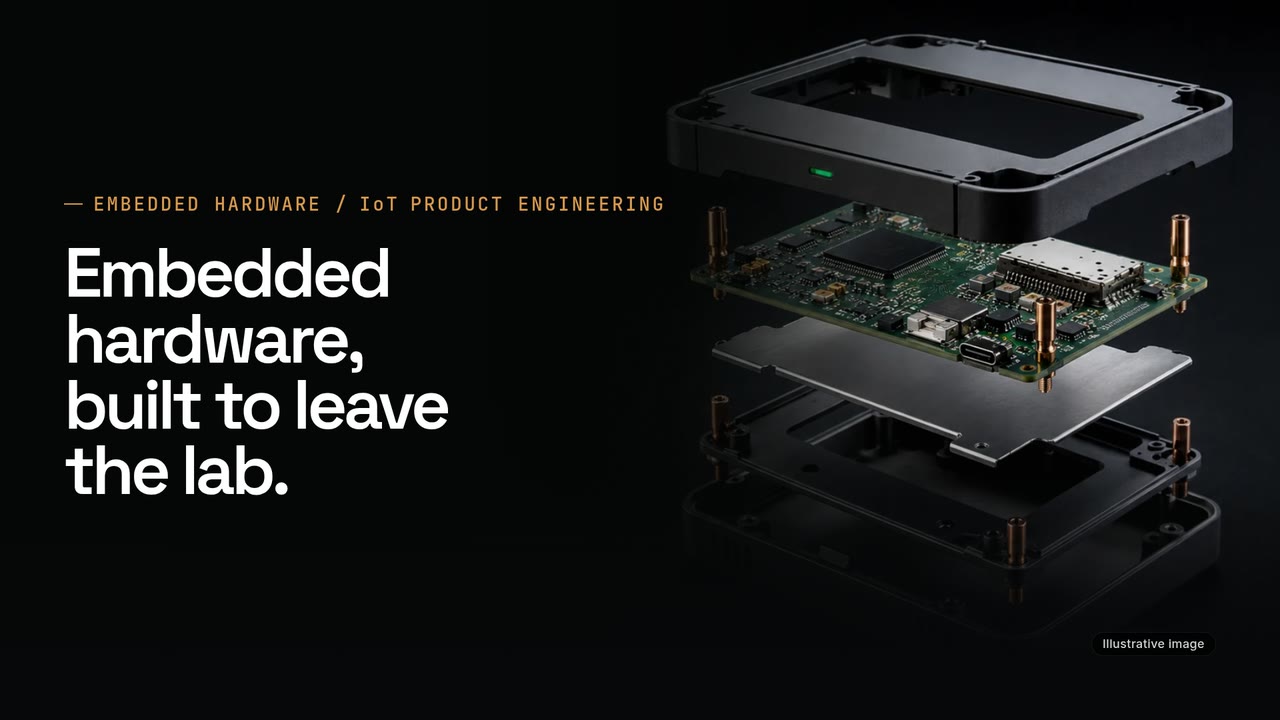
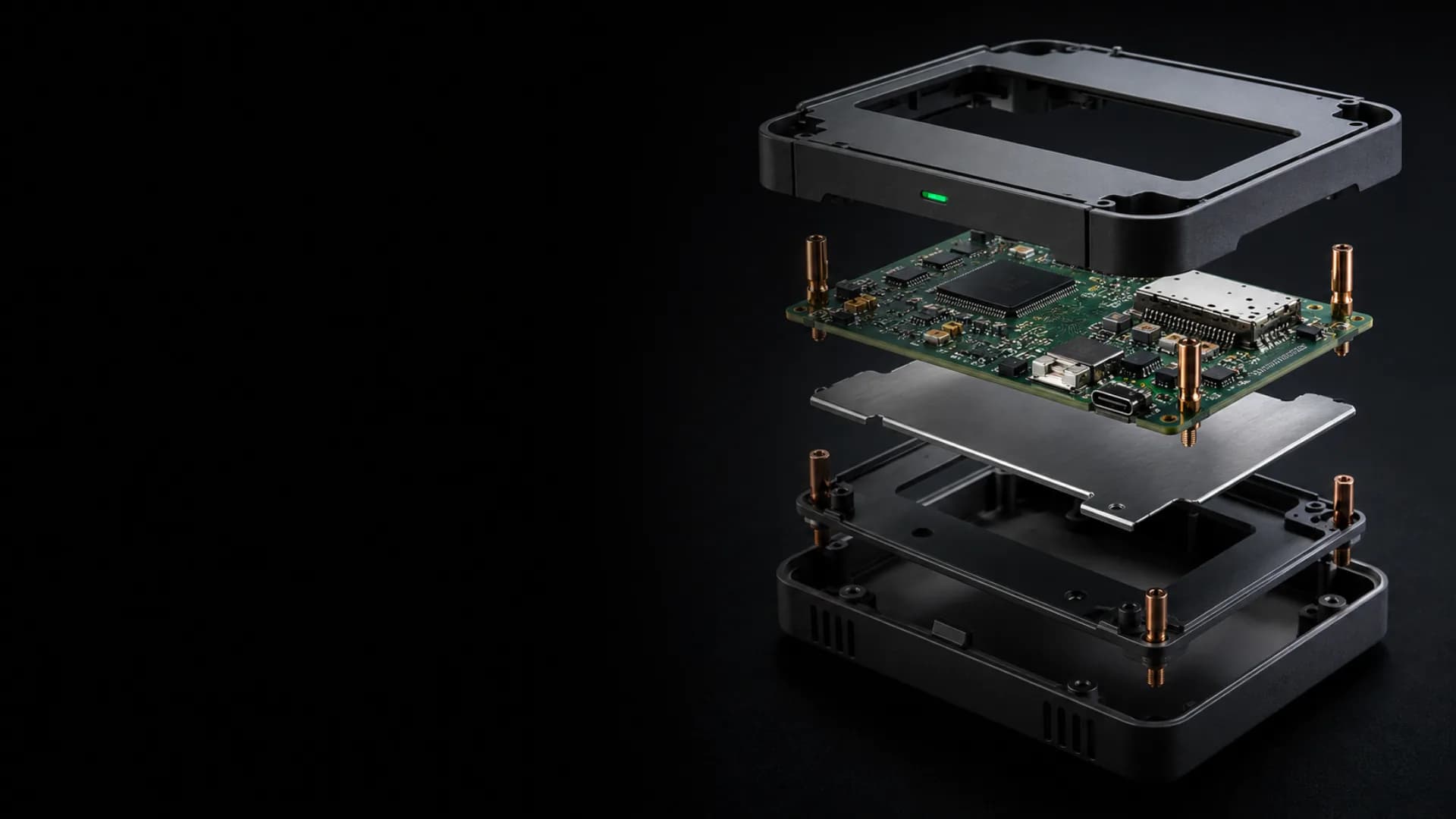
Video poster: the headline “Embedded hardware, built to leave the lab.” beside an exploded render of an embedded device: enclosure, circuit board, shield and base (illustrative image).

What Rapid Circuitry does23 s · no sound

Video text
  1. Embedded hardware / IoT product engineering. Embedded hardware, built to leave the lab.
  2. Architecture · Electronics · Firmware · Production. Architecture to manufacturing handoff. PCB design · Firmware · Compliance.
  3. 500+ projects: delivered since 2020. 25+ engineers: one team, concept to production. Up to 24 layers: PCB complexity.
  4. Industries: Medical, industrial, automotive, aerospace and consumer products. Serving the US, UK, EU & India.
  5. Rapid Circuitry. Discuss your product → rapidcircuitry.com/contact. Reply within one business day · Mutual NDA on request.
  6. The render and photos are illustrative images.
  • Hardware and PCB design

    Schematics, multilayer and HDI layout, with signal and power integrity, thermal and EMC design reviewed before fabrication.

    • System architecture design
    • High-density PCB layout
    • Signal and power integrity
    • Altium Designer
    • KiCad
    • HyperLynx

    Typical timeline: 3–18 months

    Explore hardware design
  • Firmware engineering

    RTOS and bare-metal firmware, drivers and BSPs, power management and secure wireless stacks.

    • RTOS and bare-metal development
    • Custom device drivers and BSP
    • Power management
    • C/C++
    • FreeRTOS
    • Embedded Linux

    Typical timeline: 4–16 weeks

    Explore firmware engineering
  • IoT and connected systems

    Connected devices from sensor to cloud: edge processing, secure connectivity, dashboards and analytics.

    • Scalable cloud architecture
    • Edge computing and on-device AI
    • Secure connectivity (TLS)
    • AWS IoT
    • Azure IoT
    • MQTT

    Typical timeline: 3–12 months

    Explore IoT development
  • Rapid prototyping

    Prototype boards fabricated and assembled by partner PCB fabs, plus in-house 3D printing, bring-up and bench testing.

    • Fabrication and assembly via partner fabs
    • 3D printing and CNC
    • Automated testing
    • LabVIEW
    • TestStand

    Typical timeline: 48–72 hours (standard boards)

    Explore prototyping
  • Production and manufacturing

    DFM and DFT reviews, test development and supply-chain support to move a design from prototype to production.

    • DFM and DFT reviews
    • Automated test development
    • Supply-chain support
    • IPC-A-610 Class 3
    • AOI
    • ICT

    Typical timeline: Ongoing

    Explore manufacturing support
  • Certification and compliance

    Certification preparation backed by in-house EMC/EMI pre-compliance testing; formal testing runs at accredited labs.

    • Pre-compliance EMC/EMI testing
    • Safety certification preparation
    • Environmental testing via partner labs
    • CE/FCC
    • UL/CSA
    • ISO 13485

    Typical timeline: 1–16 weeks

    Explore compliance testing

Industries

Built for regulated and demanding industries

The standards and compliance requirements we design to, sector by sector.

Medical devices

Electronics for clinical use, designed to IEC 62304 and ISO 13485 requirements with pre-compliance support, for diagnostic and therapeutic devices.

Standards we design to

  • ISO 13485:2016
  • IEC 60601-1
  • IEC 62304
Explore medical device work

Core specialties

  • Patient monitoring systems
  • High-precision diagnostic equipment
  • Therapeutic and bedside devices
  • Medical imaging and AI diagnostics

Case studies

Case studies in product development

Medical, industrial and consumer hardware: what we built, how long it took, and how each figure was obtained (measured by the client, pilot, bench test, simulation or design target).

  • Illustrative image

    HealthcareDuration:18 months

    Medical Wearable

    14 DaysBattery Life

    Design target

    End-to-end development of a wearable ECG monitor engineered to be FDA 510(k) submission-ready, designed for 14-day battery life and on-device arrhythmia detection for remote cardiac monitoring.

  • Illustrative image

    ManufacturingDuration:8 months

    Industrial IoT

    78%Reduction in Unplanned Downtime

    Client-reported

    Rapid Circuitry designed the wireless vibration-sensor nodes, edge-AI gateways and cloud dashboard for a steel manufacturer's predictive-maintenance system in India. After plant-wide deployment the client measured a 78% reduction in unplanned downtime.

  • Illustrative image

    Consumer ElectronicsDuration:12 months

    Multi-Connectivity Pet Tracker

    45 DaysBattery Life

    Design target

    Development of a pet tracking device that combines BLE beacons for indoor tracking, LTE-M/NB-IoT for real-time tracking on cellular networks and LoRa for rural and remote areas, designed for a 45-day battery life in an IP68 enclosure.

Testimonials

What clients say

In their words, from industrial and consumer projects.

  • “Rapid Circuitry built a robust Industrial IoT infrastructure with device integration, uptime monitoring, and a production-ready dashboard. Their end-to-end delivery ensured a smooth rollout and reliable performance.”

    PradeepBangalore, India
  • “Rapid Circuitry brought our vision of ‘Yells’ to life—a compact, powerful women’s safety device emitting a 120dB alert. Their focus on usability, miniaturization, and reliability made the product both effective and user-friendly.”

    Divya GargBangalore, India

Process

How a project runs

Follow one example product from brief to release: four stages, eight typical weeks, and a deliverable you can hold at the end of each one.

Skip the walkthrough

  1. Step 1, Week 1: Requirements and planning. Agree requirements, risks and milestones. Deliverables: Technical requirements document, Timeline and milestones, Risk assessment. Quality checkpoints: Stakeholder sign-off, Technical feasibility, Component availability.
  2. Step 2, Weeks 2-3: Design and architecture. System design and component selection. Deliverables: System architecture document, Schematic design, PCB layout. Quality checkpoints: Design review, Signal integrity and power analysis, EMC pre-compliance.
  3. Step 3, Weeks 4-6: Implementation. Build the hardware and write the firmware. Deliverables: Prototype hardware, Firmware codebase, Test procedures. Quality checkpoints: Code reviews and unit tests, Hardware verification, Integration testing.
  4. Step 4, Weeks 7-8: Validation and testing. Validate the system and prepare the release. Deliverables: Test results report, Pre-compliance report, Release package. Quality checkpoints: Functional and environmental testing, Pre-compliance testing, Final QA review.

Timelines are typical for a first build; formal lab testing and certification are scheduled separately. The drawings follow an example nRF52832 BLE sensor design; every value shown is illustrative.

Technology

Tools and silicon we work with

Silicon we design with, and the tools we design, build and test with.

Silicon we design with

  • Nordic Semiconductor
  • STMicroelectronics
  • NVIDIA
  • NXP Semiconductors
  • AMD (Xilinx FPGAs)
  • Espressif Systems
  • Maxim Integrated (part of Analog Devices)
  • Texas Instruments
  • Renesas Electronics
  • Semtech
  • Analog Devices

Vendors whose parts we have designed into client products. Logos are trademarks of their owners; no partnership or endorsement is implied.

EDA and simulation

  • Altium Designer
  • KiCad
  • OrCAD
  • Cadence Allegro
  • LTspice
  • HyperLynx
  • MATLAB / Simulink

Firmware

  • FreeRTOS
  • Zephyr RTOS
  • Embedded Linux
  • STM32CubeIDE
  • IAR Workbench
  • SEGGER tools

FPGA

  • Vivado
  • Vitis
  • Quartus Prime
  • ModelSim
  • Synplify Pro
  • SystemVerilog
  • VHDL

Test and validation

  • LabVIEW
  • TestStand
  • JTAG
  • Saleae Logic
  • Oscilloscopes

Cloud and edge

  • AWS IoT Core
  • Azure IoT Hub
  • MQTT
  • Node-RED
  • TensorFlow Lite
  • Edge Impulse
  • OpenVINO

Guides

Guides and cost calculators

Real price ranges, budgeting frameworks and outsourcing playbooks, written by the engineers who build these products.

FAQ

Frequently asked questions

Common questions about our embedded hardware and IoT development services.

Contact

Tell us what you're building

Share the product, current stage and target timeline. An engineer, not a sales rep, replies within one business day.
